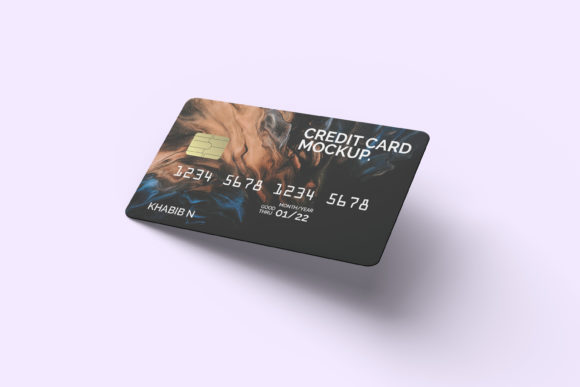
Realistic Credit Card Mockup Template
In the competitive landscape of branding and visual marketing, the presentation of a design is often just as critical as the design itself. For professionals working in fintech, loyalty programs, or corporate identity systems, a credit card is more than a plastic rectangle; it is a tangible touchpoint that conveys trust, security, and brand prestige. However, creating photorealistic renderings of physical products from scratch requires expensive 3D modeling skills and rendering software. This is where a Realistic Credit Card Mockup Template becomes an indispensable asset. It bridges the gap between digital flat files and physical reality, allowing designers to showcase their work with professional polish without needing advanced technical expertise in 3D visualization.
The Core Purpose: Bridging Digital Design and Physical Reality
A mockup template serves as a neutral canvas upon which a designer can project their creative vision. Specifically designed for credit cards, this tool provides a standardized, high-fidelity environment that mimics real-world lighting, texture, and perspective. The primary value proposition lies in its ability to help stakeholders visualize how a final product will look before it goes into mass production. Whether you are pitching a new bank card concept to clients, presenting a rebranding strategy to internal teams, or showcasing your portfolio on Behance or Dribbble, a realistic display adds a layer of credibility that flat images simply cannot achieve.
The Realistic Credit Card Mockup Template addresses a common pain point in the design workflow: the disconnect between a screen-based PSD file and the actual object. By using smart-object features, users can replace placeholder designs with their own artwork in seconds. This immediacy allows for rapid iteration, enabling designers to test multiple color schemes, typography choices, and layout variations against a consistent, high-quality background. It transforms the review process from a static examination into a dynamic evaluation of how the design interacts with light, shadow, and material surfaces.
Technical Specifications and Usability
From a technical standpoint, the effectiveness of any design resource depends heavily on its specifications and ease of use. This particular template is built within the Adobe Photoshop ecosystem, leveraging the power of Smart Objects. This feature is crucial because it maintains the integrity of the original design while allowing non-destructive editing. When you double-click the smart object layer, a separate window opens displaying your artwork. Once you save and close that window, the main document automatically updates, applying your design to the curved surface of the card with accurate perspective warping and blending modes.
- Resolution and Size: The template offers a resolution of 300 dpi with dimensions of 3000x2000 pixels. This high resolution ensures that the output is sharp enough for large-format printing, such as posters, banners, or high-resolution web displays, without pixelation or loss of detail.
- Format Compatibility: Being available in PSD format ensures broad compatibility with industry-standard tools. Most graphic designers already have Photoshop installed, removing the barrier of entry associated with specialized 3D software like Blender or Cinema 4D.
- Customizable Backgrounds: One of the standout features is the ability to change the background color. This flexibility allows designers to isolate the card for clean, minimalist presentations or place it against darker, moodier backdrops to evoke specific emotional responses. It also facilitates A/B testing by allowing quick swaps of context to see which setting enhances the design’s visibility.
- User Support: The inclusion of a PDF help guide is a practical addition. While the interface may seem intuitive to experienced users, having clear instructions for beginners ensures that even those less familiar with Photoshop layers and masks can utilize the tool effectively.
Evaluating Quality and Real-World Performance
When assessing the quality of a mockup, one must look beyond the initial visual appeal and consider how it performs under scrutiny. A low-quality mockup often suffers from unnatural reflections, incorrect shadows, or distorted perspective lines that break the illusion of reality. A well-executed Realistic Credit Card Mockup Template mitigates these issues by using pre-rendered textures that simulate the subtle glossiness of PVC or PET materials used in actual card manufacturing.
The realism extends to the edges and corners of the card. In many cheap templates, the rounded corners appear too perfect or artificially sharp. In contrast, a high-quality template captures the slight imperfections and depth of a real card, including the way light catches the embossed elements (if applicable) or the smooth finish of the surface. This attention to detail is vital for convincing clients who may be unfamiliar with design processes but have a strong sense of what a "premium" product should look like.
However, it is important to note that no single template fits every scenario. The lighting in the mockup is fixed relative to the camera angle. If your design relies heavily on specific lighting interactions—such as holographic foils or metallic inks—the mockup might not perfectly replicate those effects unless the base image includes those specific textures. Users should verify whether the provided card texture matches the material they intend to produce. If they are designing for a matte finish, but the mockup shows a glossy card, the presentation may mislead the viewer about the final product's tactile qualities.
Ideal Use Cases and Target Audience
The versatility of this tool makes it suitable for a wide range of professionals. For freelance graphic designers, it is a powerful sales tool. Instead of sending a client a flat JPEG of a logo applied to a card, they can send a photorealistic image that helps the client visualize the end result, potentially increasing conversion rates and perceived value.
Marketing agencies benefit significantly when preparing pitch decks. A cohesive set of mockups allows them to present a comprehensive brand identity system, showing how the logo and colors translate across various applications. The ability to quickly swap backgrounds means they can tailor the aesthetic of the presentation to match the client’s industry—for instance, using a sleek black background for a luxury fintech app or a clean white background for a community-focused nonprofit.
Entrepreneurs and small business owners launching their own branded cards, such as gift cards or membership passes, can use this template to create promotional materials. They do not need to hire a photographer or rent a studio; they can generate professional-looking assets directly from their design software. Similarly, educators and bloggers covering design topics can use these visuals to illustrate tutorials or case studies, ensuring their content looks polished and authoritative.
Practical Recommendations and Limitations
To get the most out of the Realistic Credit Card Mockup Template, users should adopt a disciplined workflow. Start by ensuring your source design is vector-based or has sufficient resolution to withstand the scaling required by the smart object. Keep your design simple and legible; intricate details may become lost in the shadows or highlights of the realistic rendering. Test your design in different lighting contexts by utilizing the changeable background feature to ensure contrast and readability are maintained.
One limitation to keep in mind is the static nature of the scene. Unlike interactive 3D viewers, you cannot rotate the card or view it from arbitrary angles. You are limited to the perspectives provided in the template. Therefore, it is advisable to purchase or create a pack that includes multiple angles—front, back, angled, and perhaps a hand-held shot—to provide a comprehensive view of the design. Additionally, remember that the photos used in preview images are for illustration purposes only and are not included. This means you are responsible for sourcing any additional props or environments if you wish to composite the card into a more complex scene.
Long-Term Value and Conclusion
Investing in a high-quality Realistic Credit Card Mockup Template is not merely about saving time; it is about elevating the standard of your professional output. In an era where digital fatigue is high, realistic visuals cut through the noise by appealing to our innate understanding of physical objects. They provide a bridge between the abstract world of pixels and the concrete world of commerce.
For anyone serious about presenting design work, the return on investment is clear. The combination of high resolution, easy-to-use smart objects, and customizable backgrounds offers a robust solution for a variety of projects. While it does not replace the need for good design principles or proper material selection, it serves as a critical amplifier of your creative intent. By choosing a tool that prioritizes realism and usability, designers can ensure their work is judged on its merits, presented in a context that respects the sophistication of the final product.