Clean Magazine Mockup V1 Review
In the competitive landscape of digital design, visual presentation is often the deciding factor between a client saying "yes" or walking away. For graphic designers, publishers, and creative professionals, the ability to showcase work in a realistic context is not merely an aesthetic preference; it is a fundamental component of professional communication. This is where tools like Clean Magazine Mockup V1 enter the workflow. Designed specifically for those who need to present editorial layouts with clarity and sophistication, this resource aims to bridge the gap between flat digital files and tangible print products.
This review evaluates Clean Magazine Mockup V1 based on its technical specifications, usability, and practical application in real-world design scenarios. The assessment focuses on whether this tool offers genuine value to freelancers, agency teams, and independent creators who require efficient, high-quality methods for displaying their magazine designs.
Understanding the Core Concept
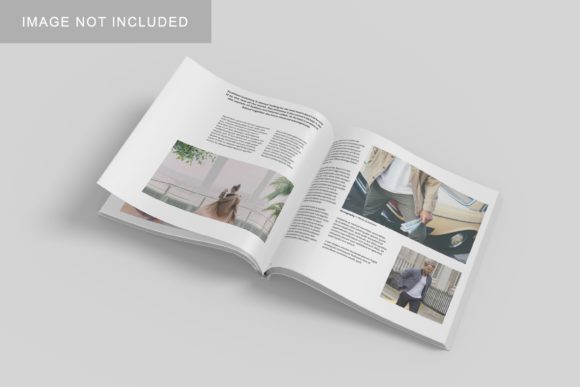
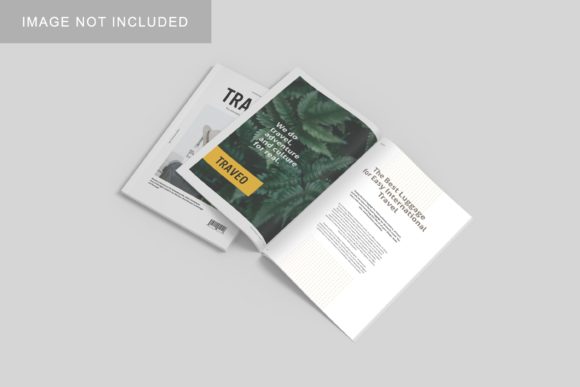
A magazine mockup serves as a digital canvas that simulates how a printed publication will look in physical space. Unlike generic document templates, a dedicated magazine mockup accounts for the specific geometry of bound paper, including spine thickness, page curvature, and lighting interactions. Clean Magazine Mockup V1 is built around this principle, offering a streamlined approach to presenting editorial content.
The product is delivered in Photoshop PSD format, which remains the industry standard for raster-based editing. The inclusion of smart-object features is particularly significant. Smart objects allow designers to replace placeholder images with their own artwork non-destructively. This means the original layout structure, shadows, and highlights remain intact while the content updates instantly. For professionals managing multiple projects or client revisions, this functionality reduces the time spent on repetitive manual adjustments.
Technical Specifications and Quality
When evaluating a digital asset, resolution and file dimensions are critical metrics. Clean Magazine Mockup V1 provides a canvas size of 3000x2000 pixels at 300 DPI. This specification ensures that the output is suitable for both web display and high-resolution printing. A 300 DPI resolution is the benchmark for print-ready materials, ensuring that text remains crisp and images do not appear pixelated when viewed closely or reproduced physically.
The aspect ratio of 3:2 (derived from 3000x2000) offers versatility. While many magazines follow standard trim sizes, this flexible resolution allows designers to crop or frame the mockup to fit various portfolio layouts without losing quality. The clean aesthetic implied by the name suggests a minimalist approach, avoiding overly complex props or distracting backgrounds that might draw attention away from the design itself. In design presentations, the focus should always remain on the work, not the container.
Usability and Workflow Integration
The ease of use is a primary determinant of a tool’s adoption rate. Clean Magazine Mockup V1 addresses this through its smart-object architecture. Users can simply double-click the smart-object layer, paste or drag-and-drop their design, save the changes, and see the update reflected immediately in the main view. This process takes seconds, making it highly efficient for rapid prototyping or quick client previews.
To support users who may be less familiar with advanced Photoshop techniques, the package includes a PDF help guide. This documentation is a valuable addition, reducing the learning curve and ensuring that even novice users can achieve professional results. The guide likely covers basic navigation, layer management, and troubleshooting common issues such as scaling errors or perspective mismatches.
Furthermore, the mockup features a changeable background color. This flexibility allows designers to adapt the presentation to different brand identities or contextual needs. Whether placing the magazine against a neutral studio backdrop or a vibrant branded surface, the ability to alter the background enhances the mockup’s adaptability across various marketing channels.
Practical Applications and Target Audience
Who benefits most from Clean Magazine Mockup V1? The target audience is broad but distinct. Freelance graphic designers working on branding packages for small businesses will find this tool invaluable for creating cohesive deliverables. When pitching a rebranding strategy, showing the new logo and typography applied to a realistic magazine spread adds credibility and helps clients visualize the final product.
Entrepreneurs and startup founders launching their own publications also stand to gain. Many modern startups operate as media companies first. For these individuals, who may not have extensive design training, a user-friendly mockup simplifies the process of creating pitch decks and investor presentations. It allows them to present their editorial vision professionally without needing to commission expensive 3D renders.
Marketers and social media managers utilize mockups to create engaging content for platforms like Instagram, LinkedIn, and Pinterest. A well-composed image of a magazine mockup performs better than a flat screenshot because it implies depth and tangibility. Clean Magazine Mockup V1 enables these professionals to generate consistent, high-quality assets for their content calendars efficiently.
Educators and bloggers can also leverage this resource. For instance, an educator designing a course workbook or a blogger promoting a long-form article series can use the mockup to create visually appealing thumbnails and promotional graphics. The clean design ensures that the text and imagery within the mockup remain legible and attractive at smaller thumbnail sizes.
Strengths and Limitations
The primary strength of Clean Magazine Mockup V1 lies in its balance of simplicity and professionalism. It avoids over-engineering, providing exactly what is needed for effective presentation without unnecessary complexity. The smart-object implementation is robust, and the 300 DPI resolution ensures longevity in usage. The inclusion of a help guide further solidifies its reliability as a standalone resource.
However, potential users should be aware of certain limitations. The preview images used in marketing materials are illustrative only and do not include the actual photos featured in the demo. This is a standard practice in the industry, but it means buyers must rely on the provided placeholders to understand the mockup’s capabilities. Additionally, as a static 2D representation in a 3D-style format, it lacks the interactive rotation capabilities of true 3D software. While sufficient for most static presentations, it may not meet the needs of agencies requiring fully animated video walkthroughs.
Another consideration is the file format. Since it is a PSD file, users must have access to Adobe Photoshop. While Photoshop is widely used, it is not universally accessible due to subscription costs. Designers using alternative software like Affinity Photo or GIMP may face compatibility challenges unless they convert layers manually, which could negate the time-saving benefits of smart objects.
Long-Term Value and Consistency
For professionals building a portfolio, consistency is key. Using a standardized mockup like Clean Magazine Mockup V1 across multiple projects creates a cohesive visual identity. Clients and employers perceive this consistency as a sign of professionalism and attention to detail. Over time, accumulating a body of work presented in a uniform style enhances the perceived quality of the designer’s output.
The resource also supports scalability. As a freelancer’s business grows, the demand for faster turnaround times increases. The efficiency gained from using smart objects translates directly into billable hours saved. Instead of spending an hour adjusting shadows and perspective manually, a designer can complete the task in minutes, reallocating that time to creative development or client communication.
Final Assessment
Clean Magazine Mockup V1 represents a practical, no-nonsense solution for designers seeking to elevate their presentation game. It does not promise revolutionary technology but delivers reliable, high-quality results through proven methods. Its suitability for a wide range of professionals—from solo creatives to marketing teams—makes it a versatile addition to any digital toolkit.
The emphasis on ease of use, combined with professional-grade resolution and flexible customization options, addresses the core needs of modern design workflows. While it requires Photoshop for full functionality, the trade-off is justified by the time savings and polished output it provides. For anyone looking to communicate their editorial designs effectively, Clean Magazine Mockup V1 offers a solid foundation for professional success.