Elevate Your Portfolio: Mastering the Art of Realistic Postcard Mockups for Professional Presentation
In the fast-paced world of graphic design, the difference between a good design and a great one often lies not just in the artwork itself, but in how that artwork is presented. Imagine you have spent hours perfecting a vibrant, intricate postcard design. It features bold typography, a striking color palette, and a layout that tells a story. However, when you share this flat image file with a client or upload it to your portfolio site, it can feel disconnected from reality. The client struggles to visualize the final product, its texture, or how it might sit on a desk.
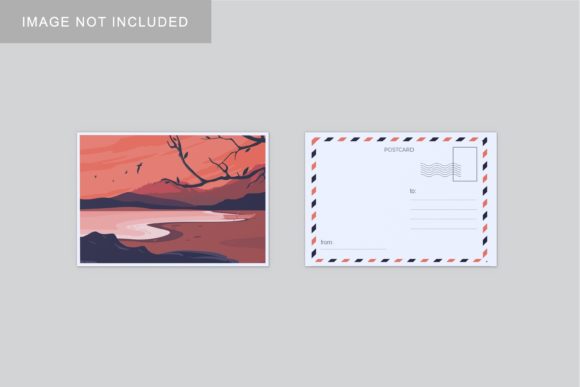
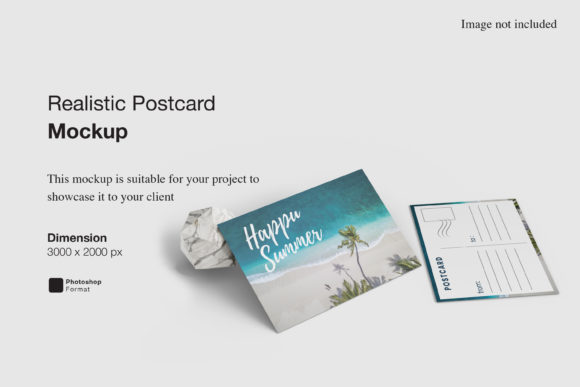
This is where the magic of a Realistic Postcard Mockup comes into play. More than just a template, this tool serves as a bridge between digital creation and physical perception. By utilizing high-fidelity 3D displays, designers can showcase their work in a way that feels tangible, professional, and ready for the real world. This article explores why realistic mockups are essential for modern creatives, how to utilize smart-object features effectively, and why this specific format is a game-changer for your workflow.
Why Presentation Matters in Graphic Design
Design is communication. When you present a design, you are communicating not only the visual elements but also the quality, attention to detail, and professionalism of your work. A flat JPEG or PNG file, while functional, lacks depth. It fails to convey the weight of the paper, the glossiness of the finish, or the subtle shadows that give an object presence in space.
Using a realistic postcard mockup allows you to place your design onto a three-dimensional canvas. This technique, known as "mocking up," helps clients and stakeholders understand the scale and context of the project. For example, seeing a business card or postcard lying naturally on a wooden table with soft lighting creates an emotional connection. It transforms a digital file into a physical possibility. This psychological shift is crucial for securing approvals and building trust with clients who may not have a technical background in design software.
Understanding the Technical Advantages
Not all mockups are created equal. The ideal tool for showcasing designs must balance realism with ease of use. A premium Realistic Postcard Mockup typically offers several key technical specifications that make it indispensable for professionals. Let’s break down these features to understand why they matter.
Smart-Object Functionality
The cornerstone of any efficient mockup workflow is the use of Smart Objects. In Adobe Photoshop, Smart Objects allow you to embed a raster or vector image into a layer. When you double-click this layer, it opens in a separate window where you can paste your own design. Upon saving and closing that window, your design automatically maps onto the perspective of the postcard in the main document.
This feature is revolutionary for efficiency. Instead of manually warping, masking, and blending your design to fit the angles of the postcard—a process that can take minutes or even hours—you can replace the current design within seconds. This speed allows designers to create multiple variations quickly, testing different color schemes or layouts without starting from scratch each time.
High Resolution and Print Readiness
For a mockup to be truly useful, it must look crisp on both screens and in print. A standard resolution might suffice for a quick social media post, but for professional presentations, clarity is paramount. High-quality mockups are typically provided in 300 DPI (dots per inch), which is the industry standard for print materials.
Furthermore, dimensions matter. A size of 3000x2000 pixels provides ample resolution for detailed viewing. Whether you are displaying the mockup on a large monitor or printing a presentation board, the image remains sharp. This level of detail ensures that every stroke of your typography and every gradient in your illustration is visible, preventing pixelation that could undermine the perceived quality of your work.
Customization and Flexibility
One of the most significant benefits of using a dedicated PSD (Photoshop Document) mockup is the ability to customize the environment. A static image limits your creative expression, but a layered PSD file opens up endless possibilities.
Changeable Backgrounds
A versatile mockup often includes layers that allow you to change the background color or swap out the entire scene. Perhaps your postcard design has a dark, moody aesthetic; you might choose a black or charcoal background to enhance contrast. Conversely, a bright, cheerful design might pop against a white or pastel backdrop. This flexibility ensures that the context of the mockup complements the design rather than distracting from it.
Accessibility and Support
Even with user-friendly tools, there can be a learning curve. That is why many premium mockups come with a PDF help guide. This documentation walks you through the steps of opening the file, locating the smart objects, and adjusting settings. It removes the guesswork, ensuring that even beginners can achieve professional results immediately. This support structure is vital for maintaining a smooth workflow and reducing frustration during tight deadlines.
Common Misconceptions About Mockups
There is a common assumption among some emerging designers that mockups are merely decorative placeholders. Some might argue that if the design is good, it should stand on its own without the need for elaborate presentations. While it is true that the core design is the most important element, the presentation acts as the vehicle that delivers your message effectively.
Another misconception is that creating realistic mockups requires advanced 3D modeling skills. In reality, thanks to the smart-object technology mentioned earlier, anyone with basic knowledge of Photoshop can produce photorealistic results. You do not need to be a 3D artist; you simply need the right template. Furthermore, it is important to note that the photos used in preview images are often for illustration purposes only. The actual PSD file contains the editable layers, allowing you to insert your own imagery seamlessly.
Practical Applications in Modern Workflows
How does this fit into your daily activities? Whether you are a freelance graphic designer, a marketing specialist, or a small business owner, realistic postcard mockups serve multiple purposes:
- Portfolio Enhancement: Displaying your work in a realistic context makes your portfolio more engaging. It shows potential employers or clients that you think about the end product, not just the digital file.
- Client Presentations: When pitching ideas, a realistic mockup reduces ambiguity. Clients can see exactly what they are paying for, leading to faster approvals and fewer revision rounds.
- Social Media Marketing: High-quality mockups perform exceptionally well on platforms like Instagram and Pinterest. They stop the scroll and attract attention, driving traffic to your services or products.
- Print Shop Previews: If you run a print-on-demand business, mockups provide customers with a clear idea of what the final product will look like, reducing returns and increasing satisfaction.
Getting Started with Your First Mockup
To begin using a Realistic Postcard Mockup, follow these general steps:
- Download and Extract: Ensure you have the PSD file and any accompanying guides.
- Open in Photoshop: Launch Adobe Photoshop and open the main .psd file.
- Locate the Smart Object: Look for the layer labeled "Replace Here" or similar. Double-click its thumbnail.
- Insert Your Design: Paste your artwork into the new window. Resize and position it to fit perfectly.
- Save and Update: Save the smart object file (usually Command+S or Control+S). Return to the main window, and your design will update instantly.
- Export: Once satisfied, export the final image as a high-resolution JPEG or PNG for sharing.
Conclusion
In conclusion, investing time in learning how to use realistic postcard mockups is an investment in your professional growth. These tools empower you to present your creativity with clarity, confidence, and polish. By leveraging smart-object features, high-resolution standards, and customizable backgrounds, you transform simple designs into compelling visual stories. Whether you are showcasing your work to a global audience or presenting to a local client, a realistic mockup ensures that your designs are seen, understood, and appreciated in the best possible light. Embrace this technology to elevate your craft and stand out in a crowded creative market.